Forklift Scales in Palatine, Illinois
Capture Load Weights During Everyday Material Movement
Forklift scales bring weighing directly into material movement workflows for facilities in Palatine, Illinois. These systems measure loads while they are already being lifted and moved, helping reduce unnecessary travel, improve weight visibility and support productive warehouse and industrial operations.
From equipment selection and installation to calibration, preventive service, troubleshooting and repair, Precision Scale & Controls supports forklift weighing needs in Palatine and across Cook County. Available systems can be matched to the forklift, expected loads, facility conditions and weight-recording requirements.
How to Choose a Forklift Scale
Selecting a forklift-integrated weighing system begins with the forklift and the work it performs. Reviewing equipment specifications, expected loads, accuracy needs, and operating conditions helps identify a configuration that supports useful measurements without interfering with safe material movement practices.
Confirm carriage class, lift-truck design, attachments and installation requirements.
Choose a scale range suited to typical and maximum loads while respecting forklift ratings.
Match measurement performance to the decisions and records the weight data will support.
Consider vibration, impacts, dust, moisture, temperature and frequency of use.
Evaluate indicator placement, readability and operator access to basic functions.
Determine whether printing, wireless transfer or compatible software connectivity is needed.
Available Forklift Weighing Options
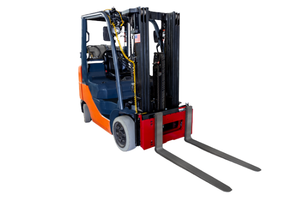
Depending on the application, available equipment may include carriage-mounted systems, hydraulic weighing solutions or other onboard configurations. Precision Scale & Controls can help businesses in Palatine, IL compare appropriate options based on required performance and existing lift-truck equipment.


Professional Forklift Scale Service in Palatine
Routine calibration helps confirm that a forklift scale continues to provide measurements suitable for its intended use. Preventative maintenance can also identify worn, loose or damaged components before they lead to larger performance problems.
Precision Scale & Controls provides calibration, maintenance and repair support for forklift weighing equipment in Palatine, IL. Our technicians can evaluate reported symptoms, inspect compatible system components and recommend appropriate corrective work.


Additional Illinois Forklift Scale Locations:
Forklift Scale Selection and Accuracy Questions
Use these answers to begin evaluating an forklift-integrated weighing system for your operation in Palatine, Illinois.
How do I choose the right forklift scale?
Start with the forklift type, carriage class, rated capacity and attachments. Then consider typical load weights, required accuracy, operating conditions, display preferences and data-management needs.
What capacity should a forklift scale have?
The weighing capacity should cover expected loads without exceeding the forklift's rated limits. Capacity, resolution and lift-truck compatibility should be reviewed together rather than as separate decisions.
How accurate are onboard forklift scales?
Accuracy varies by system design, installation, load handling and operating conditions. The required performance should be defined before equipment is selected so compatible models can be evaluated appropriately.
How often does a forklift scale need calibration?
Calibration intervals depend on usage, environment, accuracy expectations and quality procedures. High-use or demanding applications may warrant more frequent checks than light-duty operations.
Can a forklift scale be used for legal-for-trade weighing?
Certain approved configurations may be suitable when weight determines price or transaction value. Equipment approval, installation and local requirements should be confirmed for the specific application.
Where can I purchase a forklift scale in Palatine, Illinois?
Precision Scale & Controls provides forklift scale sales and selection assistance. The team can review lift-truck specifications and weighing requirements before recommending appropriate equipment options.